It helped to know that I am not alone and that there are other like-minded women leaders out there.
Capital Partner | Linebarger Goggan Blair & Sampson
New York, NY
New York, NY


It helped to know that I am not alone and that there are other like-minded women leaders out there.

The Managing Partner Forum is a go-to resource for not only what’s currently important to law firm leaders, but how law firm leaders are dealing with the issue of the moment and preparing for those of the future.

We have enjoyed working with John Remsen and his talented team. The Managing Partner Forum provides excellent content that truly assists in operating a successful business in today’s challenging environment.

The MPF programs always provide relevant, timely educational content. They are high energy and interactive which makes them fun to attend, too.

Great conference, thank you for the invitation.

The information sharing at the MPIEs is especially valuable.

My partner and I really enjoyed the conference and we look forward to attending again next year.

Connecting with other firm leaders, as it felt more like a ‘retreat’ than a ‘conference.’ Fantastic format allowed for great information and advice sharing.

I go to a lot of conferences, and your event is the one I look forward to and gain the most from each year. The power of this group is incredible. So privileged to be a part of it. Thank you for what you do for our industry.

Connecting with other firm leaders, as it felt more like a ‘retreat’ than a ‘conference.’ Fantastic format allowed for great information and advice sharing.

ATL was a great time, and I really enjoyed the conference, as always.

That was my first experience at the conference, and it was tremendously valuable.

Great job! Keep it going. Thank you for the excellent work you do for the profession.

The collegiality and brainstorming opportunities can’t be beat.

The MPF Conference is always a great event. The MPIEs and Workshops were really good this year.


The program topics are timely and well presented. Every time I attend, I learn something new.

MPF is on top of the issues facing firm leaders, often before we even see them coming in our own firms, and provides timely advice from industry experts to see us through them.

I highly recommend the MPF Leadership Conference. I’ve participated many times, as have several of my partners. We leave with new ideas and fresh perspectives every time.

Hands down the best leadership conference for managing partners I’ve ever attended.

This is my 12th or 13th time attending, and it’s always the best conference I attend every year.

The MPIEs are interesting, informative and very useful!

I look forward to this Conference every year. It really helps me to be a more effective firm leader.

MPF provides tremendous value and excellent resources. Great information. Great speakers. Great networking opportunities.

This provocative four-page article raises real leadership concerns, and the opening paragraph captures its central argument:
“95% of legal professionals believe generative AI will be central to their organization’s workflow within five years. Yet, according to the same Thomson Reuters report, more than half of firms have no AI policy, nearly two-thirds have had no training, and few firms have articulated a coherent leadership stance. This is not a technology gap. It is a leadership gap – and it is already undermining client trust, talent retention, and competitive positioning. The firms that lead the next decade will not be those with the most advanced software, but those with the most effective leadership response.”
We are seeing the same data points and thought patterns in MPF Surveys and Zoom discussions among law firm leaders. Definitely worth a read – and yet another critical responsibility being added to your already full leadership plate!

This article is based upon surveys and conversations with leaders of law firms with 200 to over 2,000 lawyers. However, we highly recommend that you read it and we think you will come away with not dissimilar issues, just a difference in magnitude.
One quote that applies to even small to midsize firms is “Success breeds complacency. Complacency breeds failure. Only the paranoid survive.” Or in simple terms change is difficult when partners are making the most money they ever have!
And to confront the issues facing law firms you have to be prepared to change!
This report is based on interviews with more than 1,500 in-house lawyers and professionals through 2022, and here are a few note-worthy highlights:
This a good report to digest if your firm works (or strives to work) with larger corporations and in-house legal departments.
Our MPF Featured Article is “Young Lawyers Need to Embrace an Ownership Mentality” written by MPF faculty member Dr. Sharon Abrahams for National Law Journal. Here are a few highlights of Sharon’s article:
In the article, Sharon includes insights from numerous firm leaders who regularly participate in MPF programs. As always, Sharon writes great advice and her guidance is spot on!
The first is a great article called by Tea Hoffmann, a long-time friend and supporter of The Managing Partner Forum. Tea runs Law Strategy Corp., and her four lessons are:
Good stuff, Tea! Thank you for sharing.
Lawyer leadership skills. We all know they are important. But can they be taught? The answer is yes…if lawyers want to learn! In her article, Yuliya defines leadership:
“The core purpose of leadership is to mobilize people (in a department, practice group, firm, company, community) around common goals to achieve concrete outcomes at scale.”
And then outlines five pillars of law firm leadership as follows:
Helping your lawyers become better leaders just makes sense – from a talent engagement perspective and a business perspective. The sooner you begin investing in people, the sooner you will see them (and your firm) thrive.
Check out the 30-minute podcast we presented with Elise Holtzman, Founder of The Lawyer’s Edge. Our topic was “Essential Characteristics of Effective Law Firm Leaders,” and we discussed these and other attributes of effective law firm leaders:
We cover these and many more topics about things they do not teach you in law school about leading lawyers.
Elise is a new member of the MPF Faculty, and you will meet her at The MPF Leadership Conference in Atlanta.
Citing numerous other articles and research, this article writes about the benefits of remote working for women.
In his article Steve says that legal departments and law firms who actively promote women into leadership roles are more likely to achieve long-term solutions than not.
Valerie is senior managing editor of Legal Management and quotes MPF Faculty Members April Campbell, JD; and Dr. Larry Richard extensively in her article.
This article tells the story of a once-successful Latin American law firm that blew apart over trust issues between founding partners. Jonathan says that “trust between partners is difficult to build up and relatively easy to break. Once broken, trust is extremely difficult to rebuild…It takes a long time…and the key players need to work intentionally on their relationship.” It starts with an honest, open conversation among the parties involved.
In this short and thoughtful article, Jordan suggests that your firm’s culture is more about its actions and choices over time, not words on its website. Says Jordan: “A law firm’s culture is defined by what is rewarded, what is tolerated, what is overlooked, and what is punished. At many firms, the outcome is jarringly different from what leadership might want.” We could not agree more.
Ida is an internationally recognized expert on law firm leadership and transition planning. Over the years, she has also written numerous books and articles about women in leadership. We are pleased to feature four chapters from her book entitled Women on Top: The Woman’s Guide to Leadership and Power in Law Firms. The topics are:
Each chapter contains practical advice and guidance for women in or ascending to leadership in the legal profession.
Since COVID sent everybody home last March, the vast majority of smaller and midsize law firms adapted quite successfully to working remotely. As we emerge from the pandemic, many firm leaders are starting to recognize what is possible. This excellent article will help clarify your thoughts and perspectives on remote working and hybrid models. This article encourages leaders to consider flexible work schedules from four main perspectives:
Lynda is a professor at the London Business School and founder of HSM, a future-of-work consultancy.
An MPF Webinar Originally Broadcast on June 2, 2021
Larry is a long-time member of the MPF Faculty and expert on the lawyer personality. As always, we collect and share current data through survey questions and audience polling. Here is some of what we learned:
Larry provides excellent guidance for law firm leaders and, already, the session has been featured in Law360 in an article by Aebra Coe entitled “How Firm Leaders Can Ease COVID’s Psychological Impacts.” Click here for the article.
Click here for On-Demand Webinar.
Click here for Handout Materials.
Law firm leaders are intensely focused on responding to the CoronaVirus crisis. However, despite their best efforts, many leaders are telling me that their people are experiencing high levels of stress, anxiety, fear, and emotional overload. That’s not surprising, given the pace and magnitude of the changes affecting us all.
During the turbulence of the past 14 months, most law firms have rightly focused their attention on managing their finances — cutting expenses, supporting profitable practices, trimming headcount, etc. At the same time, firms have paid less attention to leadership. Ironically, it is during this time of great upheaval that the need for leadership is greatest.
Using core values to help make decisions that will impact your firm and its culture long into the future is an important way to ensure you’ve carefully considered not only the facts, figures and data involved but also the people, relationships and underlying values that matter to you and your law firm.
As a thought-leader among law firm consultants, Steve always has interesting things to say. In this four-page article, Steve suggests that now just might be the ideal time for both law firms and in-house legal departments to embrace female leadership.
An MPF Webinar Originally Broadcast on February 3, 2021
On this edition of our series “The Law Firm of the Future”. Our guest panelists were Lisa Ramsay Cole, President and Managing Shareholder of Tennessee’s Lewis Thomason, and Leslie Packer, Managing Partner of North Carolina’s Ellis & Winters. One hundred-forty (140) firm leaders participated. Dr. Sharon Meit Abrahams was our guest co-host. As always, we collect and present relevant bench-marking data on our topic, including:
This was our first Webinar dedicated to women in leadership and we will be presenting more such programming in the future.
Click here to hear the Webinar.
Click here for Handout Materials.
An MPF Webinar Originally Broadcast on January 6, 2021
One of our most important and thought-provoking Webinars to date, which covered recent developments in Arizona and Utah that are predicted to have profound and fundamental impacts on the legal profession throughout the country. Both states formally allow nonlawyers to co-own law firms and give companies (mostly technology firms) the ability to provide legal services. Bigger states like California, New York, Florida and many others are watching closely and are not far behind in enacting similar reforms. During the session, managing partners Whitney Cunningham of Arizona and Carson Pearson of Utah discussed these changes in their states, how local legal communities are responding and some of the initiatives underway at their law firms. As always, we collect and present current survey data on our topic and incorporate it into the handout materials, which also include a nice article from Bloomberg Law that provides a good national overview of the situation.
Click here to hear the Webinar.
Click here for Handout Materials.
There will always be times when the way ahead is rocky and uncertain. That’s an unavoidable fact. But the great separator will be between those law firms that can adapt and forge ahead into the unknown and those that can only go as far as the paved road lets them. Encountering rocky terrain does not mean you’re inevitably going to crash. It just means that you need to be using the right piece of equipment to navigate it. Thank you, Roger, for your perspective.
An MPF Webinar Originally Broadcast on December 31, 2020
We are pleased to present the on-demand recording and handout material for this week’s MPF Webinar called ”Lessons Learned in 2020 and Big Bold Predictions for 2021.” Since April, more 2,300 managing partners and law firm leaders have participated in The MPF Webinar Series. The feedback we have been receiving has been gratifying and nothing short of fantastic. It was a fun, fast-paced session during which Uri Gutfreund and I shared our thoughts and perspectives about the impact of COVID-19 on the legal profession. We think you will enjoy it.
Click here to hear the Webinar.
Click here for Handout Materials.
An MPF Webinar Originally Broadcast on November 4, 2020
On the latest installment of The MPF Webinar Series we call “The Law Firm of the Future.” we discussed the importance of measuring both financial and firm-building contributions. In addition to plenty of timely benchmarking data on the topic, the handouts include biographical profiles, PowerPoint deck, and the raw data from The MPF 2019 Law Firm Leadership survey
Here are a few highlights:
Click here to hear the Webinar.
Click here for Handout Materials.
An MPF Webinar Originally Broadcast on December 9, 2020
We thank Scott Burke, Managing Partner of Morrison Mahoney LLP; Dan Mayo, National Lead-Federal Tax Policy of Withum; and Lisa Murray, Head of Professionals Banking of Citizens Bank, for their insights and perspectives on this timely and important year-end topic for many, many law firms.
As always, we collect and present survey data on our topic (183 law firm leaders participating) and learned the following:
As to the long-term impact of COVID-19 on the legal industry, thirty-three percent (33%) of firm leaders say it will “fundamentally change the practice of law as we know it,” a whopping, five-fold increase from when we asked the same question in May.
Click here to hear the Webinar.
Click here for Handout Materials.
An MPF Webinar Originally Broadcast on November 18, 2020
Our MPF Webinar entitled “Budgeting Considerations for 2021” with Frederick J. Esposito, Jr., Chief Operating Officer of Rivkin Radler, LLP and Tom Obermaier, Chief Executive Officer of SurePoint Technologies.119 firm leaders participated during the live session, and here are a few of the things we learned:
Click here to hear the Webinar.
Click here for Handout Materials.
An MPF Webinar Originally Broadcast on October 21, 2020
We had a very interesting and thought-provoking conversation about the growing trend for law firms to move toward virtual business models as we work through the immediacy of the pandemic and look toward a post-COVID environment. Here are a few program highlights:
Click here to hear the Webinar.
Click here for Handout Materials.
An MPF Webinar Originally Broadcast on September 16, 2020
The session was an open conversation about how law firm leaders find resolve and resilience in times of change and uncertainty. Thank you to our guest speakers: John Fanburg, Managing Member of Brach Eichler, LLC; Mickey Maher, Managing Partner of Hecht Solberg; and Leah Nelson, Founder of Nelson Leadership.
Click here to hear the Webinar.
Click here for Handout Materials.
An On-Demand Webinar for the Association of International Law Firm Networks
In August, we led a discussion among four leaders of top law and accounting firm networks to learn how they have adapted and how they see the future roles of their organizations. Our panelists were:
It was an interesting session and holds value for you and your firm. We thank Steve McGarry and the AILFN team for inviting us to participate.
An MPF Webinar Originally Broadcast on April 15, 2020
Since many firms are looking at ways to reduce expenses, we invited Kevin McClean and Lee Garbowitz from HBR Consulting to discuss “Managing Expenses During an Economic Downturn.”
In addition, here’s what we learned in this week’s brief online survey in which 75 law firms, mostly mid-size, participated:
Click here to hear the Webinar.
Click here for Handout Materials.
An MPF Webinar Originally Broadcast on July 22, 2020
Our guest speakers were Jon J. Pinney, Esq., Managing Partner of Kohrman Jackson & Krantz (KJK) in Cleveland, Ohio; and Robert A. Young, Esq., Managing Partner of English Lucas Priest & Owsley (ELPOLaw) in Bowling Green, Kentucky. We had a lively discussion about what leaders of mid-size law firms need to be thinking about during these transitional times, and here are a few program highlights:
This was the tenth program in our series of complimentary MPF Webinars we are calling “Responding to the Coronavirus Pandemic.”
Click here to hear the Webinar
Click here for Handout Materials.
An MPF Webinar Originally Broadcast on June 24, 2020
Since mid-March, we have been presenting an MPF Webinar series called “Responding to the Coronavirus Pandemic.” This session we called “Marketing Your Law Firm During a Pandemic” with Guy Alvarez, Founder of Good2BSocial, and Lynn Tellefsen, Chief Marketing and Business Development Director of Wilentz. Here are some of the highlights of what we learned:
We had a terrific session and, as always, presented plenty of timely bench-marking data.
As an added bonus for this session, participants were invited to register for “How Lawyers Can Use Social Media to Build their Brand and Grow their Practice,” an on-demand Webinar presented by Guy Alvarez. Click here to register.
Click here to hear the Webinar.
Click here for Handout Materials.
An MPF Webinar Originally Broadcast on July 8, 2020
Currently the CEO of FlexManage, Lee has been in the legal technology field for more than three decades. Morris is the Founder and President of Tabush Group. Both are recognized thought leaders on technology and the law firm of the future. We survey registrants on several topics and here is what we learned this week:
We extend our thanks to Lee, Morris and our co-host, Uri Gutfreund of Risk Strategies, for a terrific session with plenty of timely bench-marking data.
Click here to hear the Webinar.
Click here for Handout Materials.
An MPF Webinar Originally Broadcast on May 13, 2020
On May 13th, we presented our fifth MPF Webinar in a series we’re calling “Responding to the Coronavirus Pandemic.” Our most popular session to date – “Finding Forgiveness in Your Law Firm’s PPP Loan” – with more than 250 law firm leaders in attendance for the live session. During the 60-minute program, we learned that 99% of law firms have applied for a PPP loan with most having received funding. But details of the program remain murky. Our panel did a great job bringing us up to speed on the latest developments. The handouts include our PP deck, online survey results, a few timely articles and the most recent (May 13, 2020) FAQ update. Be sure to check out the response to Question #46.
Click here to hear the Webinar.
Click here for Handout Materials.
An MPF Webinar Originally Broadcast on May 27, 2020
On May 27th, we presented our sixth MPF Webinar in a series called “Responding to the Coronavirus Pandemic.” Every other Wednesday at 2:00pm ET, Uri Gutfreund and I co-host a dynamic, interactive conversation with legal industry experts on critical topics and issues. Our mission is assist law firms and their leaders navigate the COVID-19 crisis. In this Webinar, we talk about long-term impacts of the pandemic, with a focus on office space and technology. The session includes an abundance of timely data provided by participants when they register and via live audience polling. The handouts include our PowerPoint deck, survey results and supporting articles.
Click here to hear the Webinar.
Click here for Handout Materials.
An MPF Webinar Originally Broadcast on June 10, 2020
On June 10th, we presented our seventh MPF Webinar in a series called “Responding to the Coronavirus Pandemic.” Our topic was “Your Firm’s Culture in a Post-COVID-19 World”, and our guest speakers were Terry Isner of Jaffe and Leah Nelson of Nelson Leadership. Here is what we learned this week:
Those are big numbers! And they support our strong advice to put “firm culture” at the top of your firm’s priority list as we look forward and plan for the future.
Click here to hear the Webinar.
Click here for Handout Materials.
An MPF Webinar Originally Broadcast on April 29, 2020
On April 29th, we presented our fourth MPF Webinar called “Maintaining Productivity When People Work at Home.” Sharon Abrahams joined us to discuss strategies to maintain and improve productivity when lawyers and support staff work from home. Here is some of what they told us:
Interestingly, not one person who completed the survey anticipates a return to “business as usual” when the pandemic is behind us. The handouts include our PP deck, online survey results, Sharon’s article called “How to Make Working from Home Work for You,” and Cushman Wakefield’s “How-to Guide for Reopening Your Workplace.”
Click here to hear the Webinar.
Click here for Handout Materials.
An MPF Webinar Originally Broadcast on April 1, 2020
On April 1st, we presented our second of a series of MPF Webinars called “Responding to the Coronavirus Pandemic.” We invited Dr. Larry Richard, a long-time MPF Faculty member and the world’s leading expert on the lawyer personality and the psychology of leading lawyers, to share his insights and guidance to law firm leaders to help them in the unsettled times before us. He talks about lawyers’ need for predictability, control and connection; and that all of three of these needs have been disrupted in an abrupt and dramatic way. Larry talks about the importance of calm and steady leadership in times of crisis, with plenty of communication, authenticity and gratitude.
Click here to hear the Webinar.
Click here for handout materials.
An MPF Webinar Originally Broadcast on March 18, 2020
On March 18th, we presented a 45-minute MPF Webinar called “Responding to the Coronavirus Pandemic.” During the session, Uri Gutfreund and I provided guidance and resources to firm leaders on how to lead their firms through this unfolding crisis. The handouts include our PP deck, links to resources, online survey results, a template called “Pandemic Preparation and Response Plan” and a template for a “Business Continuity Plan.”
Click here to hear the Webinar.
Click here for handout materials.
As always, Patrick delivers a terrific set of articles for law firm leaders in his e-magazine called International Review. In this edition:
Along with Patrick, we’re a strong proponent of industry focused practice groups!
As the pace of change accelerates, law firms need to acutely define their core competencies and align business strategies, talent and resources to differentiate themselves in today’s market. Centers of Excellence (CoEs) just might be the way to go! In essence, CoEs are teams of experts that provide leadership, research, guidance and best practices to help your firm implement scalable and nimble approaches to changing market conditions. This practical article offers interesting insights.
This is a “must-read” book for every managing partner and law firm leader. It takes the reader through the evolutionary life cycle of a typical law firm; from formation, to growth, to sustainability, to crisis and, for many firms, to closure. Written in a compelling and engaging style, Decisions that Matter exposes the big personalities, the guiding principles and the firm cultures that have shaped many of the legal industry’s greatest success stories, as well as some its most spectacular failures. We highly recommend this terrific and thought-provoking work. Click here to order on Amazon.
As we know, most lawyers don’t like change or risk, yet change surrounds the industry. That means that one of your most important roles as a law firm leader is that of change agent. Twice a year, Patrick publishes a collection of articles in a magazine he calls International Review. The lead article in this issue is “How as a Firm Leader You Can Harness Innovation,” which presents 10 decisive actions to help you navigate this challenging issue.
In this two-page article, Sharon sets forth practical and effective initiatives that your firm can implement today to retain young lawyers and support staff. By communicating with your talent, providing the proper tools and giving opportunities to grow along the way, you are more likely to retain your attorneys so they will become the next generation of partners and leaders at your firm.
In this period of unprecedented change in the legal profession, many firms appear to be clinging to the past and the ways they’ve always done things. After all, it’s been a successful model for many years. In this article, Gerry uses the example of vessels in a sea of turbulent waters. Some vessels will make it and others will sink.
The visionary captain of a successful vessel must:
As managing partner, you’re the captain of your ship. Is your firm ready to fend off the pirates?
Twice a year, MPF Faculty member Patrick McKenna publishes a collection of articles and insights in a magazine he calls International Review. Although directed primarily toward leaders at BigLaw, his articles are timely and relevant for leaders of smaller and mid-size firms, as well. Here are the titles in the current edition:
Twice a year, Patrick McKenna distributes a collection of articles in a magazine he calls International Review. Each issue includes five or six thoughtful articles – which often focus on leadership transition and succession planning issues – that are spot-on for today’s law firm leader. The current issue is no exception and includes these five articles:
We highly recommend that you take a few minutes to review these articles and print out one or two for future reference.
As always, Patrick delivers another set of terrific articles in the current edition of International Review. The magazine runs 24-pages and we thank him for sharing it with us. The articles in this issue are:
Each article dispenses practical, straight-forward guidance on how to deal with some vexing issues for many firm leaders.

Patrick and I see eye-to-eye on many of the issues law firm leaders confront in these challenging times. As always, he delivers a fine set of articles in the current edition of International Review. Here are the topics covered in this 26-page report:
We encourage you to take a look.
Twice a year, Patrick publishes and distributes a collection of articles in a 24-page e-magazine he calls International Review. Although geared primarily toward “BigLaw,” its content is also timely and relevant for smaller and mid-size law firms. In this edition, the most important article for you to read is “Law Firm Strategic Planning: A Report on the State of the Art. Even though 97% of AmLaw 200 firms have strategic plans, Patrick observes that far too many of them suffer from a self-inflicted phenomenon call “SPOTS”…an acronym for “Strategic Planning on the Shelf.” To avoid that situation at your firm, keep your plan simple, realistic and achievable. Importantly, the plan must also involve partner accountability.
Here are his four main points for successful strategic planning:
At MPF, we believe that every law firm – regardless of size and practice mix – needs a plan.
Twice a year, Patrick publishes a collection of articles written by him and others on law firm leadership. He calls it International Review. One of the articles we especially like in the current issue is entitled “Confronting the Underperforming Partner: A Persistently Unmet Challenge.” This topic is much discussed MPF conferences, as well.
This is one of the better White Papers we’re read in recent years on firm leadership, and we highly recommend that you take a few minutes to check it out, as well. August and his colleagues assert that effective managing partners provide compelling direction, gain commitment among partners, appoint the right leaders to execute strategic objectives, and lead by personal example. It’s good stuff and we agree with most everything it says.
Twice a year, Patrick publishes and distributes International Review, a magazine featuring insightful articles on law firm leadership. This issue examines compensation systems, retirement plans for senior lawyers and several other thought-provoking ideas and concepts. There’s some good stuff here, and much of it is worth circulating to your partners.
Twice a year, Patrick McKenna distributes International Review, a magazine for law firm leaders. Although most of his work focuses on Am Law 100 firms, much of what he writes is also timely and relevant to leaders of smaller and midsize law firms. His spring 2013 does not disappoint and includes four articles. Perhaps the most interesting of the bunch is one entitled “Malignant Leadership,” which was also published in American Lawyer earlier this year.
Twice a year, Patrick publishes a great set of articles in a magazine he calls International Review, and he distributes a hard copy to selected leaders of the very largest law firms. He also provides us an electronic version to include on the MPF Website and pass along to our readers. Of particular interest in this edition are the articles entitled “Are You Developing a Star Culture?” and “The Hurdles to Initiating Change.”
Twice a year, Patrick publishes his International Review, a collection of articles on law firm leadership and management. It’s geared mostly toward those who lead larger firms, but its teachings apply to managing partners of law firms of all types and sizes. The Spring 2014 edition includes articles on the following topics:
You’ll notice that we feature a number of Patrick’s articles on the MPF Website. It’s good stuff.
For several years now, Patrick has been kind enough to share his bi-annual collection of articles with our readers. It invariably includes some of the best, most thoughtful articles on law firm leadership and the role of the managing partners. This issue includes five articles, and the one I liked best is entitled “When Firm Leaders Transition.” His advice for the incoming leader includes:
He also dispenses guidance to the outgoing leader to effect a smooth, easy transition when law firms change leaders.
This issue of Internatinal Review, published by Patrick McKenna, runs 24 pages and features five great articles every firm leader should read. They include numerous practical ideas, tips and techniques that will make you a more effective firm leader and that you can put to use immediately. The articles in this issue are:
We especially recommend the fourth article and its ten important questions.
From the inaugural issue of the Managing Partner Forum newsletter, firm leaders reveal their top management concerns and thoughts on strategic planning. Our response? It’s time to assume the role of CEO in order to make the firm profitable.
Over 90 managing partners, firm leaders and top consultants to the legal industry participated in The MPF 2010 Annual Conference on April 29th in Atlanta, Georgia. This comprehensive White Paper summarizes the key findings revealed through the use of state-of-the-art Audience Participation Technology. It focuses on how law firms approach strategic planning and the role of the managing partner; including what they do, how much time they spend in the role and how they get paid for all that non-billable effort. This is really good stuff.
Twice a year, McKenna Associates publishes a magazine called International Review. Each issue strives to contain a “balanced blend of contributions covering the subjects of law firm strategy, economics and leadership,” and this issue includes articles by David Maister, Patrick McKenna and others.
It is distributed in hard copy format to firm leaders of US and Canadian firms with more than 50 lawyers. Going forward, we’re pleased to make a PDF version of the magazine available to our readers, as well.
Twice a year, MPF faculty member Patrick McKenna publishes and distibutes his magazine called International Review to leaders of firms with 50 or more lawyers in the US and Canada. He is kind enough to make it available to our readers, as well, in PDF format. This issue includes articles about strategic planning, leading change and handling difficult partners.

Law Practice Today is a monthly digital publication by the ABA’s Law Practice Division that provides “the most current information and trends in the legal industry by delivering anecdotes from professional in the field of law.” Each year, they publish “The Leadership Issue” featuring a collection of articles about law firm leadership and governance. Among the articles in this issue:
This is good stuff.
For this year’s Reports, ALA (Association of Legal Administrators) has collected data for 60+ different positions in 40+ metropolitan areas, including compensation information for law firm COOs, Executive Directors and other key positions, as well as key staffing ratios and associate billable hour expectations. Importantly, the Reports break down the data by firm size, region and a myriad of other factors. With 400+ pages of information, these Reports are essential tools to determine compensation and benefits for your firm’s management staff. MPF readers get $100 off the purchase price. The promotional code is “MPF2017.”
We’re pleased to share the audience polling results from The MPF 2014 Leadership Conference held on May 8, 2014 in Atlanta. More than 100 managing partners and firm leaders participated. The bench-marking data in this slide deck is especially relevant to smaller and mid-size firms.
Among the highlights:
More than ever, strong and effective leadership is necessary in today’s highly competitive and rapidly changing market.
This seven-and-a-half (7-1/2) minute video about building trust and leading change is well worth the time. In it, Spence talks about how effective change leaders can build trust among those they lead. He discusses the “Four C's of Trust:” Consistently Communicating that You Are Competent and that You Care.
He talks further about “high source credibility” that you, as a leader, earn over time as you competently and reliably handle situations and relationships with those around you. Importantly, trust can take weeks, months, even years to build, but it can be lost in an instant. Building trust among partners is especially important for law firm leaders who are charged to lead an especially tough group – lawyers who are high on skepticism, hate change and love autonomy. (See "Herding Cats" article by Dr. Larry Richard.)
Powerful stuff.
Change surrounds the legal industry. The marketplace for legal services is more competitive than ever, and the pace of change will accelerate into the future. Law firms that embrace strategic planning and innovation, invest in their people and their clients, and build cultures that encourage teamwork and accountability are emerging as the clear winners. At the same time, once great law firms are falling apart and many won’t survive. To remain viable and competitive, law firms must operate more like businesses, and that means strong, effective and passionate leadership.
On May 7th, more than 100 managing partners and law firm leaders gathered in Atlanta to learn with and from peers at our 24th law firm leadership conference. During the Opening Session, we featured audience polling technology to collect input on a variety of issues ranging from strategic planning to the authority they have as managing partners. The results were instant and anonymous. Here are some of the more interesting findings:
Altogether, we presented twenty-seven (27) questions, and the results provide terrific bench-marking data for you and your firm.
Last week, we spoke at the 20th Annual Meeting of LEGUS, an international network of law firms, in New Orleans. We were asked to discuss the importance of investing in young lawyers and grooming them for a successful future. Generally, law schools aren’t doing a very good job training and developing “practice-ready” lawyers. And most law firms aren’t doing a stand-out job either when it comes to training them in areas such as time management, billing practices, marketing and business development. (By the way, click here to read what Skadden is up to.)
In addition to the obligatory PowerPoint slide deck, my handout materials include five great articles about law firm leadership.
On May 5, 2016, more than 100 managing partners and law firm leaders gathered in Atlanta for The MPF 2016 Leadership Conference. During the opening session, we distribute audience polling devices and asked participants to weigh in on a variety of issues important to leading a successful mid-size law firm. The polling technology is fun, and the results are anonymous and instantaneous. Looking at the data, here are a few highlights from this year’s Conference:
As always, this year’s MPF Audience Polling Results provide great bench-marking data to share with your colleagues. Please let us know if you’d like them in PowerPoint format.
Too many lawyers. More demanding clients. Increasing competition. Industry consolidation. Globalizing economy. Advances in technology. Proliferation of disruptors. Yikes! What’s a law firm to do? As we know, change surrounds the legal industry, yet smaller and mid-size firms have been slow to adapt and evolve.
On July 19th, we presented a hard-hitting program for 70 managing partners and firm administrators in Chicago. To prepare, we drew upon bench-marking data we collected for The MPF Leadership and Governance Survey (147 firms, April 2016) and the Audience Polling Results we collected at The MPF 2016 Leadership Conference (87 firm leaders, May 2016). We also provided some strong advice to leaders of mid-size firms. Here are a few highlights:
This is fresh and relevant bench-marking information with more to follow when we publish our soon-to-be released MPF White Paper.
Founded in 1971, the Association of Legal Administrators (ALA) has grown to more than 10,000 members in 30 countries. If your firm is looking for a new administrator, its Career Center has a number of articles and resources that will be helpful to you, including:
– Evaluating Your Firm’s Needs
– The Candidate Search Process
– Defining the Role of the Firm Administrator
– How to Succeed When Hiring for the First Time
On August 29th, we presented a Managing Partner Breakfast Roundtable in San Diego. The meeting attracted 20 firm leaders from the region and was sponsored by UPS. The topic was “How to Be a More Effective Firm Leader.” These handout materials include some terrific benchmarking data on how 160 managing partners rate their firms in twelve critical areas.
Each month, John Sterling offers insightful analysis of his “Law Firm Strategy Question of the Month” and presents a new question for the coming month. Recent topics include:
• Partner Compensation System Satisfaction,
• Profit Improvement Strategies, and
• Creating the Model Partner.
It’s good stuff and we encourage you to check it out.
On April 16, 2013 MPF President and CEO John Remsen, Jr. spoke at the ALA’s Annual Conference on a topic near and dear to The Managing Partner Forum. It was entitled “Law Firm Leadership: The Critical Role of Firm Administrators.” When it comes to firm administrators, our message to managing partners is really quite simple. As managing partner, you’re the CEO of a multi-million dollar enterprise. To be most effective in the role, hire and empower a trusted and competent COO to take time-consuming day-to-day matters off your desk, so you can focus on more important big picture issues. More than 200 attended the session. Click above to download the handout materials.
According to its website, “The ALA is the undisputed leader for the business of law, focused on the delivery of cutting-edge management and leadership products and services to the global legal community.”
If you are not familar with the ALA, you should be; and if your firm administrator is not a member of the Association of Legal Administrators, he or she should consider joining and getting involved. The ALA has more than 9,500 members and 110 chapters throughout the United States.
Its 2014 Annual Conference and Exposition will be held May 19-22, 2014, in Toronto.
According to HBR, 70% of all change initiatives fail. Don’t let yours be among them. This collection of ten must-read articles helps firm leaders understand that change involves a long-term, multi-faceted approach in order to be genuine, meaningful and lasting. Among the titles:
We highly recommend this easy-to-digest compilation of articles written by the world’s thought leaders on change management and organizational behavior.
Collaboration among highly autonomous partners is essential and still too rare. Learn the six psychological secrets behind people's powerful impulse to comply, how to put them to work on your behalf and how to defend against them. Entertaining and useful on many levels.
This is an invaluable scorecard. Rank executive committee members on a scale of 1 to 5 based on performance attributes including collegiality, marketing and technical expertise.
Most law firms don’t have a written job description for the managing partner. Grab this one. How does it compare to your responsibilities and duties as leader of the firm?
It’s a good idea for firm leaders to look outside the legal industry from time to time to gain leadership and management perspectives and ideas. This is the best place to find them. The Harvard Business Review ($79/year for 12 issues; $129/year includes HBR online) sets the standard when it comes to monthly business newsletters.
We asked a series of questions, utilizing state-of-the-art audiance participation technology, to more than 35 managing partners and firm leaders at the inaugural Managing Partner Forum for Northeastern Law Firms held on November 4, 2011 in Boston. Their answers are consistent with previous polling sessions. 80% do not have a job description and 85% have no planned exit strategy. We think they should have both.
Even today, 60% of mid-size commercial law firms do not have a written strategic plan. Among those that do, 90% report that it has led to improved firm profitability and performance. Why, then, do most firms still not have a firm-wide plan? The reasons vary…but it’s not really that hard if you go about it in a thoughtful, systematic way.
MPF CEO John Remsen, Jr. led a Web seminar presented by the ABA’s Law Practice Management Section in September 2011. Panelists included MPF Advisory Board member, Vince Valenza, Managing Principal McNamee Lochner in Albany, New York, and Bob Young, Managing Partner of English Lucas in Bowling Green, Kentucky. Allison Shields was the moderator.
This is a timely and helpful program if your firm is thinking about embarking on a strategic planning initiative. Click here for more information and to download the session.
There has never been a book quite like this one. First Among Equals ($26, Free Press) is among the foremost books ever written on leadership within a professional services firm and is essential reading for law firm leaders. The book is easy to follow, as the authors draw upon their extensive experiences working with professional services organizations throughout the world. They also include insights and valuable examples culled from some of the top leaders in this field. Originally published in 2002, FOE is now in its sixth printing and has been translated into nine languages. It has also been among the top selling business books for many years in the US, Canada and Australia. The lessons and learnings presented here will give you insights and action tips to help you provoke and inspire your people to their full potential
At 184-pages, The Extraordinary Managing Partner ($65, ALA) is a must-read for anyone serving or aspiring to serve as a managing partner in a law firm. In 2010, John Michalik stepped down as Executive Director of the Association of Legal Administrators (ALA) after serving in the role for 15 years. He has also just published this book based on extensive interviews and research involving 75 exceptional law firm managing partners and their management teams. The top four key traits according to these leaders? Trustworthiness, communication skills, firm-first decision-making and decisiveness.
Click here to order.
If we've heard it once, we've heard it 1,000 times. Leading a law firm is by no means an easy task…and they certainly didn't teach you much about it in law school. Thank goodness for the MPF faculty members Brian Burke and Patrick McKenna, who have once again joined forces to provide an invaluable resource for today's firm leader. Serving at the Pleasure of My Partners ($49, West Publishing) is packed full of real-life scenarios and provides proven, practical guidance for today's exceptionally busy managing partner.
We've partnered with West/Thomson Reuters to extend a 20% discount off the cover price to our readers. Click here for more information and to download the table of contents and a free chapter.
As the legal profession evolves, competition heats up and law firms continue to grow, an increasing number of firms are choosing to run themselves more like businesses and less like loose confederations of sole practitioners. Many lawyers are appalled by this creeping "corporatization" of the profession, while others believe it's time to adopt more streamlined structures and management practices
Managing the Modern Law Firm ($40, Oxford University Press), edited by Laura Empson, provides a rich blend of historical perspective, scholarly analysis, and practical insight by an impressive group of professionals and academicians. At 264 pages, it gives law firm leaders plenty to think about.
The Association of Legal Administrators (ALA) holds a treasure trove of great information about the business side of running a law firm. This groundbreaking book – written especially for law firm management professionals – provides practical and proven ideas and suggestions to help firm administrators excel in this challenging role. It's well-organized and features numerous articles, surveys and case studies. We've arranged a special deal with ALA, so our readers can purchase this great book for just $35.
This meticulously researched book puts into plain language an undeniable fact: The modern workplace, law firms included, is beset with assholes. Sutton argues that assholes – those who deliberately make co-workers feel bad about themselves and who focus their aggression on the less powerful – poison the work environment, decrease productivity, induce qualified employees to quit and therefore are detrimental to businesses, regardless of their individual effectiveness. He also makes the solution plain: They have to go.
Although occasionally campy and glib, Sutton's work is sure to generate discussions at water coolers around the country and deserves influence in law firm hiring and firing strategies.
Over the past few years, MPF Faculty member Tom Grella has written numerous articles and several books on law firm leadership and strategic planning. Through a series of practical lessons, Tom draws on his own experiences and applies time-tested leadership principles to lawyers and law firms, including:
Lessons in Leadership ($79.95, American Bar Association) is now available in paperback through the ABA’s Website.
In this period of unprecedented change in the legal profession, many firms appear to be clinging to the past and the ways they’ve always done things. After all, it’s been a successful model for many years. In this article, Gerry uses the example of vessels in a sea of turbulent waters. Some vessels will make it and others will sink.
The visionary captain of a successful vessel must:
As managing partner, you’re the captain of your ship. Is your firm ready to fend off the pirates?
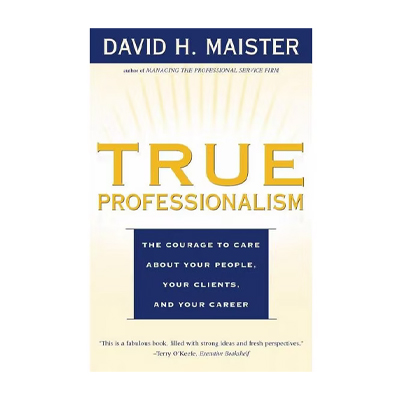
If we could only recommend one book to a lawyer in private practice, it would be True Professionalism ($26, Simon & Schuster)! Maister’s lesson is clear: believe passionately in what you do and never compromise your standards and values. Act like a true professional, aim for excellence and the money will follow. The challenge for leaders is to find the strength and courage to do what we know is right. A must read.
Good to Great ($29.99, HarperCollins) is one of the leading books on organizational performance in many decades. It discusses concepts like Level 5 Leadership, First Who (first get the right people on the bus, then figure out where to drive it) and the Flywheel. It makes our short list of recommended reading for every managing partner.
John Kotter is widely regarded as the world’s foremost authority on leadership and change. Leading Change ($26.95, Harvard Business School Press) outlines in just over 200 pages an actionable 8-step process to initiate and sustain organizational change….even in a law firm environment. Another "must-read" for managing partners.
The Tipping Point ($39.95, Hachette Book Group) is another international best-seller from Malcom Gladwell, whose other books include Blink and Outliers. Gladwell examines the phenomenon of social change – that magical, defining moment when an idea, trend and behavior really takes hold and spreads throughout a society or an orgnaization. Gladwell argues that big changes often occur as the result of a series of small events. It's a lively and engaging read.
Leading for Lawyers ($39.95, ABA Publishing) is the first book of its kind written by a lawyer for lawyers, judges, law firm administrators and others in the legal profession and provides practical advice on how to become a more effective leader. Rubenstein takes the reader on a guided tour of the leadership literature of the past fifty years, identifying the various brands of leadership and pointing out the strengths and weaknesses of each.
In talent driven firms, stars, say the authors of Aligning the Stars ($39.95, Harvard Business School Press), make the difference between winning and losing – and they walk out the door each day. Outstanding firms align stars across business lines, geographies, even generations. Building a successful firm is akin to building a brick wall: You may want to add many bricks at once, but it's tough to do without toppling the wall.
The Knowing-Doing Gap ($32.50, Harvard Business School Press) confronts the challenge faced by many law firms and their leaders. They know what to do, but they just don't do it! This book is a candid, uselful and realistic guide for improving your firm's organizational performance.
If you had to pick just one book to read to be more a more effective managing partner, this is it. Managing the Professional Services Firm ($26.00, Free Press), written by David Maister, covers a wide array of topics ranging from strategy to profitability, marketing to motivating employees. This should be in every managing partner's library.

In this best-seller, Ferrazzi writes about how to build a lifelong community of colleagues, contacts and friends without becoming a networking jack-ass. Never Eat Alone ($24.95, Doubleday) is on almost every rainmaker’s short list of recommended reading. It makes our short list, too.
More than ever, running a successful law firm in today’s evolving and cut-throat marketplace for legal services requires a commitment to planning and leadership. Yet, when it comes to leadership training, recent MPF surveys suggest that smaller and mid-size law firms are doing an abysmal job in this important area. For example, 75% of managing partners report that their firms are doing a “fair” or “poor” job grooming future firm leaders, and only 32% of managing partners indicate that their firms provide any kind of leadership training for its young lawyers.
This short article reminds us that most organizations don’t run very well without strong and effective leadership.
Brewster is founder of Rawls Law Group, a boutique healthcare firm based in Richmond, and he’s participated in several MPF Leadership Conference over the years. And while many firm leaders bemoan the flaws of the younger generation, Brewster says that his experience has been (mostly) a positive one. Unlike many firms, Brewster reports that his firm has been highly successful recruiting and retaining young lawyers and support staff. Here are some of his suggestions to other firm leaders:
We thank Brewster for sharing this great article with our readers.
It’s an extremely difficult situation when a law firm has weak and ineffective leadership. And in many smaller and mid-size law firms, the ineffective leader is often the founding partner. August contends when partners find themselves with poor leadership, they need to take the ultimate responsibility and assume control of the firm. Otherwise, the firm’s long-term livelihood is in jeopardy.
The primary contributions of a great law firm leader are to drive firm strategy, assign responsibilities, and help lawyers and support staff grow both personally and professionally. If a leader doesn’t do these things, nothing else may matter.
Rather than a formal and elaborate firm-wide training and development program, Ida believes that the best approach to developing future firm leaders is to have established firm leaders build the next generation of leaders through mentorship. Importantly, to employ a “leaders teaching leaders” approach, your firm needs a supportive culture, leaders who are good mentors, resources and accountability. It does require a considerable investment of time – a most precious resource – by busy and productive partners. Done the right way, your firm can assure itself of a long and successful future.
Patrick works primarily with leaders of AmLaw 100 law firms and has written many articles and several books on effective law firm leadership. Each year, he also presents a one-day Workshop called “The First 100 Days” for leaders of large law firms. In this article, he provides 29 tips to be more effective in the challenging, often ill-defined, role of law firm leaders. Among his suggestions:
This great article is a “must read” for law firm leaders, both new and old!
Your law firm runs on computers and, over time, your firm’s IT systems become outdated and security risks develop. Therefore, it’s critical that your firm undertakes a periodic evaluation and examination, so make sure all systems are working properly and risks are not left unchecked for extended periods of time.
In many cases, you’re relying on your COO, your IT Director and/or your outside service provider to manage the situation. However, that reliance does not replace your ownership of this responsibility. As the firm’s chief executive officer, you are the person ultimately responsible to ensure that the IT systems and controls are aligned with the firm’s goals and legal requirements and are being managed, maintained, updated and kept current.
This short article, written especially for managing partners, outlines what an IT audit covers and the questions you should be asking your COO and/or IT Director on a regular basis.
As the business of law evolves, so do the leadership and governance models at today’s most successful smaller and mid-size law firms. Drawing upon bench-marking data we collected in three MPF surveys last year, this article finds that smaller and mid-size law firms are slowly implementing more structured governance models intended to streamline decision-making empower stronger leadership. In the article, we also present our recommendations for today’s law firm leader, including:
Lead More and Manage Less
Your role as firm leader si not to make everybody happy. Your role is to lead a profitable and successful law firm and that sometimes involves making tough decisions and holding partners accountable.
Codify Roles and Responsibilities
You need a job description setting forth your responsibilities, the time required of the role, and how you get paid for that time. So does your executive committee, and so do your practice group leaders.
Invest in Your Leadership Skills
Read books and articles, go to conferences, and befriend other firm leaders in town. It’s not an easy job, and you don’t have to go at it alone.
Back in the good ole days, a young lawyer “made partner” simply by hanging around for seven or eight years and not upsetting too many clients or too many of the current partners. Once in, it was next to impossible for a partner to be voted out. Those days are long gone, as a growing number of firms have raised the bar for admission and look for much more than time served as they bring on new firm owners. “We’re running a business not a country club. Partners must act and contribute as owners, not long-time employees.” says one of the more vocal members of the MPF Advisory Board. And she’s right!
In this article, Tom spells out the obligations of law firm owners, including:
Is your firm holding its equity partners accountable to think and act like firm owners?
As law firms plot their strategies to adapt to today’s hyper-competitive marketplace, the need for effective planning and leadership is more important than ever. It’s critical that firms put their best people in these critical roles. Susan’s article concludes with the seven most important characteristics for today’s firm leaders.
We might add an eighth and very important characteristic of firm leaders.
We’re constantly reminding managing partners to think “big picture” and get the day-to-day stuff off their plates. Ideally, they should think and act more like CEOs, with trusted, competent and capable COOs at their sides. As CEOs, managing partners should focus time and attention on these types of priorities:
The COO, working closely and in step with the CEO, should have primary responsibility to oversee the day-to-day business affairs of the firm, including Human Resources, Information Technology, Marketing, Finance and Facilities. Importantly, the COO should have a “seat at the table” at partnership and executive/management committee meetings.
The success (or failure) of your firm’s practice groups will depend largely on the effectiveness of its practice group leaders. Because firms compete primarily at the practice group level, it’s imperative for your firm to have the right people in these critically important leadership roles. Eric says there are three ways to achieve more effective leadership in your firm:
We couldn’t agree more. All too often, firms default to the most senior partners or the partners with the biggest books of business for these roles. They may not be the right people for the job.
From 1988-2015, Don served as Chairman of Hinshaw & Culbertson LLP. Under his leadership, the firm grew to become a national firm with more than 500 lawyers and 25 office locations. In his two-page article, Don sets forth an easy, yet effective, way for firms to evaluate and assess the performance of their leaders. And as the pace of change heats up, planning and leadership are required more than ever.
In April 2017, McKinsey & Company published an article – “What Makes a CEO ‘Exceptional’?” – that examines and analyzes the characteristics of highly effective CEOs of S&P 500 companies. Roger’s article brings it home to law firms, in particular, and discusses three characteristics that contribute to successful leadership in the law firm environment. They are:
Although we’ve run across few law firms willing to be led by an outsider, the other two attributes can be successfully achieved and are absolutely essential for effective law firm leadership.
Armed with an MBA from The Wharton School, Joel has been advising law firms since he began his management consulting career in 1966. He’s a frequent speaker and author on a myriad of topics related to the business of law.
In this article, Joel writes about the important relationship between leadership and management in the law firm environment. In particular, he discusses the relationship between the managing partner and the firm’s executive/management committee, and requisites for firm leadership. He also asserts that, for a firm to achieve its highest potential, partners must be willing to subordinate some degree of autonomy and independence to firm leadership.
Based in Dallas, Roger has been working with law firms and service providers to the legal industry for more than 30 years. Interestingly, he especially enjoys working with firms in transition. In this article, he writes about the need for committed and effective leadership in law firms. He also dispenses practical guidance to leaders of law firms that currently enjoy a solid and stable situation, as well as firms in difficult and stressful circumstances.
Remember the good ole days when Martindale-Hubbell ruled the world? And its coveted “av” rating? And those big books impressively displayed in your firm’s law library? Well, times have changed!
Today, there are more than 1,100 lawyer and law firm accolades, rankings, listings and directories, according to Jaffe. The number has exploded in the last ten years.
Do your firm’s clients reference directories in their selection of counsel? Which ones (if any) are best for your firm and its lawyers? What policies (if any) should your firm have in place to ensure you’re achieving maximum ROI?
After thirty years in the business of law, we’re pleased to offer our thoughts and guidance.
In this article, Mark writes about research by Edward Hess, a professor at the University of Virginia’s Darden Graduate School of Business, which compiles the findings of eight well-researched and highly-regarded studies about high-performing organizations. Using different approaches and methodologies, all eight studies found that high-performing organizations share these characteristics:
The article provides practical ways that you can “hone your humility” to become a more effective law firm leader.
Here are 12 questions that you, as an effective firm leader, should be asking yourself, your fellow firm leaders, your lawyers and your support staff on a regular basis.
Gale is a rock star in the world of CPA firms. She’s been selected as a “Most Recommended Consultant” by Inside Public Accounting for nine consecutive years, and as one of the “Top 100 Most Influential People in Accounting” by Accounting Today for seven consecutive years. This article speaks to those firm owners (in either a CPA firm or law firm) who have comfortably settled into the passenger seats at their firms and, until now, have been along for the ride. (I’ll bet you even have some at your firm!) Now, many of these “passengers” are being asked to slide into the driver’s seat. They’re being asked lead, market and help grow the firm. But all is not lost. There is hope and this short, yet powerful, article is a great place to start.
As a leader in your firm, you set the culture. Great leaders set and maintain an optimal culture where each individual enthusiastically contributes their best work for the good of the entire organization. We’re constantly on the look-out for impactful articles about law firm leadership to share with our readers and this one – although not specifically about law firm leadership – really grabbed my attention. It’s short. It’s practical. And it’s really good. Here are five of the 13 habits:
Listen. Great leadership comes from understanding your organization and its people. Understanding comes from listening to your partners, your clients and market.
Share. Share your vision and goals. Set the bar high. People want to feel like they’re part of something great.
Recognize. Always recognize and celebrate your team. Great leaders share credit for success and accept responsibility for failure. Also, they praise in public and criticize in private.
Commit. Make a commitment to yourself to be the best firm leader you can be. Read books and articles. Attend conferences. Collaborate with other leaders, both in and out of the legal profession.
Take Care. Be good to yourself. Studies reveal that you’re at your best when you exercise and engage in a healthy lifestyle.
Riveting bolts or building the Golden Gate Bridge? Cutting stone or constructing Notre Dame Cathedral? Does your firm have a “Noble Purpose?” Many studies reveal that how your firm and its people perceive their contributions to the world and to society have a significant impact on their engagement in their work, as well as their long-term career satisfaction. Does your firm have a “Noble Purpose"…a reason for being that engages and fulfills your partners, your associates and your support staff? Here are a few to consider:
You get the idea. What’s your firm’s “Noble Purpose?”
Building accountability into an important firm initiative is difficult. As firm leader, you can neither assume it will happen, nor can you demand it. Accountability measures require genuine buy-in and commitment from firm leadership, and the require sensitivity by project leaders to the challenges each lawyer will face in contributing to the project. Success comes from enthusiastic participation in the program, not from metrics. Too often, says Eric, accountability measures can derail the success of a program if they are not handled correctly. His provides excellent guidance and advice.
A successful firm, according to the body of research on the subject, is one characterized by a team-oriented, firm-first culture. Anne maintains that an individual lawyer succeeds only when the firm succeeds. She writes that effective teamwork in a law firm is brought about by a five-step process that can transform a disparate group of lawyers into a high-performing team that achieves great results. He five steps are:
This is an excellent article to circulate among your partners. Good stuff.
This article maintains that the managing partner must take the helm as the true owner of the law firm’s cybersecurity. We agree. Unfortunately, many firm leaders view it as an “IT issue.” Judy and Deena write that cybersecurity requires a broad-based approach that exceeds the reach and capabilities of the IT department, and that the managing partner is the best person to set the tone and require that cybersecurity become a firm-wide priority. Here are the steps to begin:
Is your firm prepared?
If I’ve heard it once, I’ve heard a gazillion (that’s right, gazillion) times from frustrated law firm leaders: “Today’s young lawyers just don’t want to work very hard like I did when I was a young lawyer. They want work-life balance, yet they believe they’re entitled to make the big bucks just because they went to law school. Back in my day…”
Well, young lawyers are here to stay, and they’re starting to assume leadership roles in many firms. You’re not going to change an entire generation, so you best learn to understand them and what makes them tick.
Natasha includes her tips and offers a few additional resources if you want to lean more.

When it comes to succession planning within a law firm, we often hear from managing partners: “I’m concerned that our young partners don’t have what it takes to run this firm in the future. They lack the drive, commitment and work ethic to become owners of the business.” And from young partners, we hear: “The senior partners won’t let go. They cling to control and won’t introduce us to their clients and referral sources.” Firms need to find ways to bridge the gap if they want to be around in 2020 and beyond. Sue shares her advice to help your firm manage its succession process.
The skill set required of a great lawyer is far different (in fact, the exact opposite in many areas) than the skill set required of a great law firm leader. Great leaders are optimists, embrace change and think long-term. In this article, Larry outlines the “behavioral influence” approach to leadership and provides a simple set of strategies that can be highly effective in leading the lawyers in your firm. They are:
It’s a great article with solid leadership advice.
“When you transform your law firm into a great place to work, the psychological engagement of your people soars,” says Larry Richard. “And engagement is the attitudinal gold standard” that leads to higher productivity, improved career satisfaction, more loyalty and longer tenure and, ultimately, increased profitability.” Larry offers eight things you can do that really matter to make your law firm an exceptional place to work.
In this article, Steve sets forth the five traits of effective law firm leadership, the obstacles that impede quality leadership at many firms, and the styles of leadership that might be right for your firm. Finding that right leadership style is more “art” than “science.” By the way, Steve’s five traits for effective leadership are:
How are you doing in your role as firm leader? This article contains some guidance to help you improve.
Our inaugural Leadership Academy was a great success and we’re pleased to share a brief article highlighting four of the main topics (along with faculty commentary) we discussed. They are:
Based on the feedback we’ve been getting from participants, we’ll be presenting more of these workshops in the future. Stay tuned for details.
Timothy Corcoran, our Keynote Speaker, was well-received in delivering a hard-hitting presentation emphasizing our theme – “Evolve or Perish: Leading Your Firm in an Increasingly Competitive Market.” Together, we wrote a two-page report immediately after the Conference highlighting some of the major themes and issues discussed during the day. Among them:
We’ve all spent countless hours in unproductive, time-wasting meetings. Meetings that begin 15 minutes late and have no agenda, no leadership and wander aimlessly from topic to topic. Meetings during which most of the participants appear more engaged with their smart phones than the conversation before them.
As an effective law firm leader, it’s critically important that the meetings you run be meaningful, valuable and effective. In fact, I know many managing partners take pride in and are known for their ability to run a great meeting. In our opinion, great firm leaders run great meetings.
Here's a short but hard-hitting video that hammers home the dramatic changes in the legal industry over the past decade. We suggest that you play it at your next partnership meeting and ask your partners what they think. If this doesn't get their attention that your firm needs to change, nothing will.
The video is produced by Re-ThinkLaw.org, an initiative launched by an outfit called Axiom. Stay tuned.
This is a terrific article written by Tim Corcoran, a new member of the MPF faculty. Tim has worked in the legal industry for more than 20 years helping law firms, in-house legal departments and suppliers to the legal services industry deal with and capitalize on the rapidly changing landscape surrounding them. In this article, he shares ten things he’d do differently if he were put in charge of a mid-size law firm.
Among his recommendations:
A great read.
Jordan Furlong is a lawyer, consultant and industry analyst who forecasts the dramatic impact the changing legal market will have on lawyers, law firms and other legal organizations. And, as we all know, leading change in the law firm is a challenging task. In this short, but really good, article, Jordan outlines a five step process to make it happen. His guidance:
Much has been written lately about where an effective managing partner should spend most of his/her leadership and management time. And MPF faculty member Brian Burke has strong feelings on the issue. He suggests that helping strong performers, meeting with clients and focusing on long-term strategy are where it’s at. Brian especially warns firm leaders against spending too much time trying to rescue “lost causes” who cannot or will not ever become productive members of the firm. In many cases, it’s best to help them move on, he says. This article appeared in the Sept/Oct 2012 issue the ABA’s Law Practice Magazine.
This is an article we wrote that appeared in the November/December issue of Law Practice magazine, published by the American Bar Association. Our advice to firm leaders? Create job descriptions. Get to know the firm’s top clients. Develop a firm-wide strategic plan. And encourage partners to invest in the firm’s future.
In this gem of an article, Ed says he finds little in common among unsuccessful law firms, because each one tends to fail in its own unique way. He does, however, find that there are a number of factors that are almost always present in highly successful law firms. These factors include leadership, expectations, and a subjective compensation plan.
After 25 years in the legal industry, I often find myself working with firms that are long on planning, yet woefully short when it comes to implementation. My advice? Pick just three meaningful initiatives, dedicate the required resources, and assign a responsible partner – not a committee – to make sure each initiative is accomplished. And follow the advice is Gerry’s brilliant article.
This article interviews a pair of Harvard Business School professors who talk about the importance of identifying future leaders, training them to be effective in their roles and retaining them as top talent – especially in a mid-sized organization.
There is no definitive answer to the question of exactly how long an outgoing leader should stay in office after announcing his or her departure. Many management experts advocate a swift transition to avoid lame-duck syndrome or firm drift. However, one-on-one interviews with dozens of firm leaders reveal a very different approach.
For new managing partners, the responsibilities are multi-faceted and the stakeholders are diverse, both within and outside the firm. This article looks at the most common mistakes, the biggest challenges, some unanticipated surprises, and how to avoid them.
In working with hundreds of law firm leaders over the past twenty years, McKenna has observed several warning signs that often lead to weak or ineffective firm leadership.
“A leader’s lasting value is measured by succession,” says leadership author and guru John Maxwell. Tom Grella, a long-term member of the MPF Advisory Board, puts his spin on the topic from the perspective of managing partner of a mid-size firm. Importantly, he writes about the role of current firm leadership in the process. Tom is Past Chair of the ABA’s Law Practice Management Section. This article appears in the May/June issue of the ABA’s Law Practice magazine.
Peter Marlette, Managing Partner of Damon Morey in Buffalo, New York, has recently joined the MPF Advisory Board. This outstanding article, which originally appeared in the New York Law Journal, is must reading for leaders of mid-size law firms. It discusses the exciting opportunities for mid-size firms in today’s marketplace for legal services. Among his recommendation: Adopt and implement a firm-wide strategic plan, and become active in the right law firm network. His firm is a member of ALFA International.
According to the research presented in this timeless, often-cited, article by Dr. Larry Richard, lawyers are off the charts – when compared to the general population – when it comes to certain personality characteristics. Among them:
A must read article to help you, as managing partner of your firm, understand what you’re up against.
As a new member of the MPF faculty, we’ve asked Larry to provide a few articles for our Website. This one says that, as a law firm leader, you should want and solicit feedback about how you’re doing. The more you understand about yourself and how others perceive you, the better equipped you are to effectively respond to the concerns of others, to understand those you lead, and to gain buy-in from them on their own terms.
Developing leadership skills is hard work. And it's especially difficult for lawyers who, by nature, tend to be skeptical, autonomous and risk averse. Yet the absence of strong, committed leaders who are trusted and inspire confidence within the firm is often cited as a major factor in most law firm dissolutions. Has the time come for your firm to invest in developing leadership skills in its lawyers? If no, why not? If yes, what, when, who and how? This article will help answer some of those critical questions.
David Maister writes some really good stuff and you'll find lots of his books and articles featured on our Website. This particular article discusses things like mission, vision, values and culture in the context of a law firm. It's a great article to circulate among your partners in advance of your next Firm Retreat. It will get them thinking about a whole bunch of issues, including the rules and codes of conduct (if any) by which your firm and its professionals live.
This interesting and thought-provoking article appears in January edition of the ABA's Law Practice Today. In fact, there are several good articles in this issue, but this one got my attention. Among other things, Corcoran writes about how more progressive law firms are focusing attention on continuous process improvement and finding new, more effective ways to get things done.
We found this rather interesting list "100 Managing Partners You Need to Know" browsing the Web earlier this month. Not surprisingly, it appears as if one must be with an AmLaw 200 firm to be on it. Lawdragon says it contacted more than 50,000 legal professionals for their input.
There are three common reasons why law firms fail, says this article that appears in the June edition of ABA’s Law Practice magazine. Lack of leadership. Lack of strategic focus. Lack of financial discipline. Don’t let your firm be among those that fall apart or seek refuge through an acquisition.
Much ado has been made over the new partnership between Best Lawyers in America and US News & World Report to present their version of law firm rankings. We’ll be writing more on that topic in a soon-to-be-published MPF White Paper. In any event, there are a few thoughtful articles on their website including this one. And it’s good news for smaller and mid-size law firms.
This thought-provoking article was featured in Law Practice Today, the ABA’s monthly online magazine. In it, William Blackburn reports on a growing number of law firms that have adopted new models of governance to help them survive, even thrive, in both good times and bad. He profiles numerous firms that have implemented broad-based sustainability initiatives — cultural, social, economic, environmental, and financial — to ensure their long-term prosperity and well-being.
We are strong advocates for strong, competent, business-minded administrators in law firms. Management. Marketing. Finance. Human Resources. Technology. They make the trains run on time, and they make the firm more money. This article talks about the critical role of firm administrators from the perspective of three managing partners – from small, mid-size and large law firms. One thought we especially like: "Acting like a partner, that is like an owner not an employee, goes a long way toward helping the administrator get a seat at the table."
From strategic planning to effective committee structure, this two-pager gets right to the point. Although simple in concept, these rules are not always easy to apply and follow. But the most successful organizations do….including law firms.
For many years, Keith Houck was the COO of GrayRobinson, now one of the largest and most successful law firms in Florida. In his article, he compares growing a law firm to nurturing a garden. Although each plant has its own preferences and special needs, they function and look their best as a group. But not every plant is good for the health of the entire group.
This article contends that companies that are good at growing leaders do so in the trenches at the “line manager” level, not through their HR departments. That would equate to a department head and practice group leader in the context of a law firm. It includes a “Leadership Development Checklist” on how to grow great leaders.
This is a must-read article for firm leaders, especially in these challenging times. "Out of difficulty, leaders rise. That someone might as well be you," says acclaimed author Quint Studer. The 11 bits of advice offered in this article are the components of leadership greatness in law firm executives.
Normal.dotm
0
0
1
30
176
PanTropic Technologies
1
1
216
12.0
0
false
18 pt
18 pt
0
0
false
false
false
/* Style Definitions */ table.MsoNormalTable {mso-style-name:"Table Normal"; mso-tstyle-rowband-size:0; mso-tstyle-colband-size:0; mso-style-noshow:yes; mso-style-parent:""; mso-padding-alt:0in 5.4pt 0in 5.4pt; mso-para-margin:0in; mso-para-margin-bottom:.0001pt; mso-pagination:widow-orphan; font-size:12.0pt; font-family:"Times New Roman"; mso-ascii-font-family:Cambria; mso-ascii-theme-font:minor-latin; mso-fareast-font-family:"Times New Roman"; mso-fareast-theme-font:minor-fareast; mso-hansi-font-family:Cambria; mso-hansi-theme-font:minor-latin; mso-bidi-font-family:"Times New Roman"; mso-bidi-theme-font:minor-bidi;}MPF Faculty member Bob Denney offers practical advice to firm leaders in the wake of the worst economic recession in 70 years. We couldn’t agree more with Bob’s points. It’s time for law firm leaders to step up.
Riffing on an article from Fast Company, a publication that focuses on creative individuals in the business world, Cobb issues advice for the law firm environment. Like "Find, hire and promote people that make you and the organization uncomfortable." This article is a shot in the arm for the naysayers and people afraid of change.
How should a firm appropriately compensate its managing partner for the non-billable time required of the role? Take a look at Peter Giuliani’s article that appeared recently in the ABA’s Law Practice Magazine.
You’ve just accepted your new role as managing partner of the firm. Congratulations. Now what? This article, published recently in the ABA’s Law Practice Magazine, offers a list of savvy first steps to help you get started on the right foot.
Meetings are one of the most universal parts of business life, but one of the least effective communication tools. Read this article to learn ways to run more efficient and productive meetings at your firm.
Harvard management guru David Maister asks the ultimate question "Can lawyers be 'managed' at all?" Given their unique personalities, it's no easy task. We think every firm leader should read this article.
The managing partner job rarely comes with an instruction manual or even a job description. Rose polled firm leaders to find out the real concerns of new law firm leaders. Should you lead by consensus or decree? How much time will you spend managing? Learn what your colleagues had to say.
MPF Advisory Board member Glenn Callison wrote this article for Texas Lawyer magazine a few years ago. In it, he talks about what he has learned in his role as Chairman and CEO of Munsch Hardt, a 100-lawyer law firm based in Dallas, TX.
Most firms don’t utter the "s" word — succession — until disaster strikes. This article leads off with a great example of that. Don’t let your firm fall into the malaise and wait until fate forces your hand. Succession planning benefits firm leaders of today and tomorrow.
Have you ever heard this excuse from your colleagues? "I didn’t go to law school to become a salesperson!" If the business aspects of practicing law don’t come naturally to you … or to someone you know … this is the article you need. It’s time to change your approach and tap into entrepreneurial resources you’ve had all along.
Today’s law firm leaders face extraordinary challenges. Learn steps that the top level of firm leadership can take to enhance the effectiveness and performance of their organizations.
Once again, Patrick has been kind enough to share with us a collection of articles he distributes twice a year in a publication he calls International Review. Patrick consults mostly with AmLaw 200 firms and his thoughts and perspectives are equally helpful to leaders of smaller and mid-size firms, too. Over the years, he has served on the MPF Faculty. The six articles in this issue are:
This is good stuff, and we encourage you to check it out.
According to numerous studies and our experience working with hundreds of law firms, the most successful and profitable firms are characterized by a culture of collaboration, sharing and teamwork. After all, you’re running a law firm, not a collection of sole practitioners sharing office space. Being an inclusive firm leader goes a long way toward building such a culture. This article runs just two pages and is packed full of great ideas and concepts. Here are the six attributes the distinguish inclusive leaders:
These traits may seem obvious. Importantly, the article provides three insights that would be very helpful to you as a firm leader.
Twice a year, Patrick publishes International Review, an electronic magazine that contains four to five thoughtful and inspiring articles for law firm leaders. It’s geared primarily toward BigLaw but highly applicable to smaller and mid-size firms, too. The articles in this issue are:
We thank Patrick for sharing the current issue of International Review with our readers.
In our work with smaller and mid-size firms, we find that most have challenges achieving diversity and inclusion. And they are not alone as even the largest US law firms face similar challenges.
Since the mid-1980s, the majority of law school graduates have been women, yet only 20% of equity partners at AmLaw 200 are women. As they move up the ranks, many opt to take the non-equity partner track, others move to in-house positions and others choose to start families and leave the profession altogether. This report looks at the career paths of women attorneys in the largest US law firms.
On the bright side, the report finds that women occupy a higher percentage of leadership roles within their firms. Here are few findings:
The White Paper also reveals strategies and tactics that firms are using to address the issue.
According to Altman Weil’s 2018 Law Firms in Transition report, eighty-three percent (83%) of law firms admit to having chronically under-performing equity partners within their ranks. Instead of avoiding the issue (as many firms do), Tea recommends that law firm leaders address non-performance early on and at the first sign of a problem. She offers these five tips:
We agree completely with the point Tea makes in her article. Leading a law firm is not an easy job. Leading a law firm requires courage. With rare exceptions, chronic under-performance must not be tolerated.
According to Gallup, 70% of employees are disengaged at work. Furthermore, 70% of an employee’s motivation is directly influenced by his/her manager or supervisor. Motivated employees are 37% more productive, and they’re 87% less likely to quit. When it comes to your law firm, substitute the term “Equity Partner” for “Manager/Supervisor” and the words “Associates/Support Staff” for “Employees.”
For starters, Travis says you need to stop making things worse by eradicating seven negative behaviors. Here are three of them:
After that, you should go to work on making things better. He sets forth seven things you can do to make people love their jobs. Here are three of them:
We’ve observed that many Equity Partners receive little or no training on how to be a good boss. This is a nice article to circulate and discuss at an upcoming partnership meeting.
The role of law firm maning partner is like no other and they teach you little about how to lead lawyers in law school. This report summarizes the results of a 30-question survey in which 86 firm leaders from BigLaw participated. It asks about priorities, job descriptions and time spent in the leadership roles. Its findings are relevant for leaders of smaller and mid-size firms, as well. Here are a few highlights:
Regular readers of The MPF Weekly know where we stand on job descriptions and where firm leaders should be spending their time.
Twice a year, Patrick publishes and distributes a 24-30-page magazine he calls International Review. It typically contains four to five thoughtful and inspiring articles for law firm leaders, designed mostly for BigLaw. For many years, he’s been kind enough to share an electronic version of the magazine with our readers. The articles in this issue are:
As always, we thank Patrick for sharing his insightful collection of articles with readers of The MPF Weekly.
Larry is the world’s leading expert on the lawyer personality. He’s has been on the MPF Faculty since the early days and is consistently rated one of our most popular speakers. We’ve also presented stand-alone conferences with him about the psychology of leading lawyers, and we’ll be including him in future programs.
This 14-page article offers practical guidance on what to do when the esprit de corps can use a boost at your law firm. It starts with leadership, and here are Larry’s ten key factors that can transform any organization, including your firm.
The more consistently you apply these concepts and principles, the more likely you are to have a happy, productive law firm.
John Smock believes that well-run, focused practice and industry teams offer the best opportunity for consistent and continued growth in revenue and profitability. He further maintains that it’s critically important for law firms to reward and compensate team leaders based on the performance and profitability of the team.
The problem is that far too few firms do it in a meaningful way, as compensation systems typically focus on individual, not group, performance. In this six-page article, John describes an approach that rewards team leaders without upsetting the existing compensation system at your firm.